Page Navigation
Ready for an adventure that will transport you to a world of myths and legends? Get ready to explore the mystical kingdom of Bhutan, nestled in the breathtaking Himalayan mountains. In this captivating journey, you will dive into the rich tapestry of folklore and hear tales of legendary creatures like the elusive yeti and encounter spiritual beings. Unlock the secrets of this enchanting land as you unravel the captivating stories and mysteries that have shaped the culture and beliefs of Bhutan. Get ready to immerse yourself in a realm filled with wonder and intrigue.
Bhutan’s Rich Mythology
Introduction to Bhutan’s myths and legends
Welcome to the mystical land of Bhutan, a Himalayan kingdom steeped in myths and legends that have shaped the culture and beliefs of its people for centuries. Bhutan’s rich mythology is a fascinating tapestry of ancient stories that find their roots in Buddhist teachings, indigenous beliefs, and influences from Tibetan and Indian mythological traditions. These myths and legends not only add color to the cultural fabric of Bhutan but also provide insight into the spiritual and supernatural world that exists alongside the physical realm.
Influence of Buddhism on Bhutan’s mythology
Bhutan, often referred to as the last Shangri-La, is deeply influenced by Buddhism, which has played a pivotal role in shaping the country’s mythology. Buddhism arrived in Bhutan in the 7th century, introduced by the revered Guru Padmasambhava, also known as Guru Rinpoche. His teachings and the subsequent spread of Buddhism laid the foundation for the formation of Bhutan’s unique mythological traditions.
Yetis: The Elusive Snow Beings
Legend of the Yetis in Bhutan
Among the intriguing mythical creatures that capture the imagination of both locals and visitors are the elusive yetis. These legendary beings, also known as the “Abominable Snowmen,” are said to roam the snow-covered peaks and remote valleys of Bhutan. According to Bhutanese folklore, yetis are intelligent creatures that possess both human and animal characteristics. They are believed to be gentle, benign spirits who occasionally interact with humans, offering wisdom and protection.
Folklore surrounding Yetis
In Bhutan, stories of yetis have been passed down through generations, becoming an integral part of the country’s folklore. Local tales recount encounters with these enigmatic beings, ranging from benevolent interactions with villagers to cautionary encounters that emphasize the need for respect and reverence for the natural world. Yetis are often depicted as guardians of the environment, and their presence is believed to signify a harmonious balance between the physical and spiritual realms.
Encounters and sightings of Yetis
Although hard evidence of yetis remains elusive, there have been numerous reported sightings and encounters by individuals claiming to have crossed paths with these mythical beings. Many of these accounts have occurred in the remote and mountainous regions of Bhutan. While some sightings may be attributed to misidentifications or misconceptions, the stories and testimonies continue to fuel intrigue and wonder surrounding the existence of yetis in Bhutan.
Scientific explanations and theories
Scientists and researchers have explored the phenomenon of the yeti from a scientific perspective, offering various explanations for the purported sightings. Some theories suggest that yetis could be bear species with unique characteristics, while others propose psychological and cultural influences that shape the perception of these beings. The scientific community continues to debate the existence and nature of yetis, leaving room for both skepticism and open-minded curiosity.
Spiritual Beings in Bhutanese Mythology
Beliefs in spiritual beings
Bhutanese mythology encompasses a wide array of spiritual beings that inhabit the ethereal realms. These beings coexist alongside humans and play significant roles in the lives of the Bhutanese people. The belief in these spiritual beings transcends religious boundaries, drawing from both Buddhist and animistic traditions. From ghosts and nature spirits to gods and deities, each entity holds a unique place in Bhutanese folklore and mythology.
Ghosts and their significance in Bhutan
Ghosts hold a prominent position in Bhutanese mythological narratives. Known as “Phantoms” or “Deities of Local Residences,” these spirits are believed to be the souls of deceased individuals who have not found their way to their next incarnation. Bhutanese people hold a deep reverence for these spirits and offer them prayers and rituals to ensure their peaceful passage to the afterlife. Ghosts are also considered protectors of certain places, and their presence is respected and acknowledged.
Nature spirits and their role in Bhutanese folklore
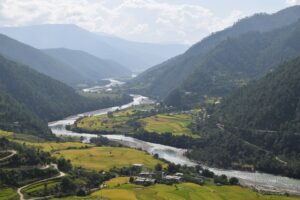
Bhutan’s pristine landscapes are home to various nature spirits, known as “Lus.” These spirits are believed to reside in lakes, mountains, rivers, and forests, guarding and nurturing the natural world. People often leave offerings and perform rituals to appease these spirits and seek their protection. These nature spirits are deeply revered and are believed to bring good fortune or misfortune, depending on the human interaction with the environment.
Gods and deities in Bhutanese mythology
Bhutanese mythology also encompasses a pantheon of gods and deities, each associated with specific qualities, virtues, and aspects of life. These entities are derived from both Buddhist and indigenous traditions, blending together to form a unique spiritual landscape. Gods and deities are revered and worshiped through elaborate ceremonies, prayers, and offerings. They are seen as guides and sources of divine knowledge, benefiting humanity by aiding in times of need and presenting valuable teachings.
Origins of Bhutanese Mythology
Influence of Tibetan and Indian mythology
Bhutan’s mythology, like its cultural and religious heritage, is greatly influenced by both Tibetan and Indian traditions. As a landlocked country sandwiched between Tibet and India, Bhutan has absorbed elements from these neighboring regions, blending them with its own indigenous beliefs. Tibetan Buddhism, with its intricate mythological traditions, has particularly played a significant role in shaping Bhutan’s mythological landscape.
Unique aspects of Bhutanese mythological traditions
Despite the influences from Tibetan and Indian mythology, Bhutan has distinct mythological aspects that set it apart. The country’s isolation and preservation of traditional practices have allowed for the development of unique folklore and tales specific to Bhutan. The integration of indigenous animistic beliefs with Buddhist teachings has given rise to a mythology that reflects the Bhutanese people’s deep connection to nature and the spiritual realms.
Mythical Tales of Bhutan
Legends of Padmasambhava, the Guru Rinpoche
The mythological figure who stands at the center of Bhutan’s mythology is Guru Rinpoche, also known as Padmasambhava. According to legend, Guru Rinpoche brought Buddhism to Bhutan, subduing demons and evil spirits during his journey. Tales of his teachings, miracles, and spiritual exploits are woven into the very fabric of Bhutanese history and belief. Padmasambhava’s legacy is celebrated throughout Bhutan, with monasteries and sacred sites dedicated to him.
The Divine Madman: Drukpa Kunley’s extraordinary stories
Another prominent figure in Bhutan’s mythology is Drukpa Kunley, fondly known as the Divine Madman. This unconventional saint is revered for his unorthodox methods of teaching, often employing humor and sexual imagery to convey spiritual wisdom. Drukpa Kunley’s stories are filled with audacious acts, including subduing malicious spirits and spreading wisdom through his unconventional lifestyle. His legacy continues to inspire and entertain Bhutanese people, who celebrate him through various festivals and rituals.
Origin stories of sacred sites in Bhutan
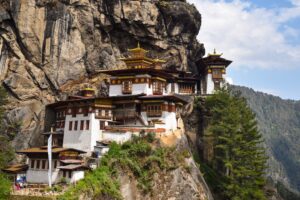
Sacred sites in Bhutan often have mythological origin stories associated with them, adding layers of meaning and significance to these revered places. From the legendary origins of Taktsang Palphug Monastery, perched precariously on a cliffside, to the tales behind Jambay Lhakhang and its connection to Guru Rinpoche’s spiritual journey, these stories provide a glimpse into the mythological threads that have shaped Bhutan’s sacred landscape.
Sacred Texts and Oral Traditions
Bhutan’s sacred texts and their significance
Sacred texts play a vital role in Bhutan’s mythology, serving as repositories of wisdom, spiritual guidance, and mythological narratives. Among the most revered texts are the “Kanjur” and “Tenjur,” containing Buddhist scriptures and commentaries. These texts provide a foundation for understanding Bhutan’s mythological traditions and serve as a source of inspiration for rituals, ceremonies, and prayers.
Oral traditions as carriers of myths and legends
In addition to written texts, Bhutan’s mythology is also preserved and passed down through oral traditions. Elders, storytellers, and religious practitioners play a crucial role in keeping the myths and legends alive, recounting tales to the younger generations. The oral transmission of these narratives ensures the continuity of Bhutan’s mythological heritage and provides a deeper understanding of the cultural and spiritual significance of these stories.
Monastic rituals and preservation of mythology
Monastic institutions in Bhutan serve as bastions of mythology, actively engaging in rituals and ceremonies that uphold and preserve the country’s mythological traditions. These rituals often involve elaborate dances, chants, and offerings, carried out by monks who have dedicated their lives to the study and practice of Bhutanese Buddhism. Through these rituals, the mythology of Bhutan is not only celebrated but also enlivened, creating a profound spiritual connection between people, myths, and the divine.
Exploring Bhutan’s Mythological Sites
Tiger’s Nest: Legends and spirituality
Perched on a cliffside, the Taktsang Palphug Monastery, also known as Tiger’s Nest, is one of the most iconic and mythologically significant sites in Bhutan. According to legend, Guru Rinpoche flew on the back of a tigress to this spot, subduing a malicious spirit and establishing a sacred site. The monastery’s remote location and breathtaking views make it a pilgrimage site for both locals and visitors seeking spiritual solace and a connection to Bhutan’s mythology.
Punakha Dzong: Mystical stories of the fortress
Punakha Dzong, a majestic fortress located at the confluence of two rivers, holds not only historical significance but also mythological tales. Built in the 17th century, the dzong is believed to be inhabited by the protective deity Pelden Lhamo. Legends recount miraculous events that occurred during the dzong’s construction, further enhancing its mythical aura. The grandeur and spiritual ambiance of Punakha Dzong make it a must-visit destination for those exploring Bhutan’s rich mythology.
Jambay Lhakhang: Mythological connections
Jambay Lhakhang, an ancient temple nestled in the Bumthang Valley, is closely associated with Guru Rinpoche’s spiritual journey. Its origins can be traced back to the 7th century, and the temple’s construction is said to have magically reached its completion overnight. Jambay Lhakhang is also renowned for hosting one of Bhutan’s most vibrant festivals, the Jambay Lhakhang Drup, where masked dances and religious rituals bring ancient myths to life.
Taktsang Palphug Monastery: Divine origins
Taktsang Palphug Monastery, commonly known as the Tiger’s Nest, holds immense spiritual significance and mythological tales. Precariously perched on a cliffside, this monastery is believed to have been blessed by Guru Rinpoche, who meditated in a nearby cave. The legend recounts that Guru Rinpoche arrived at the site on the back of a tigress, subduing a demonic spirit and leaving an indelible mark on the sacred landscape of Bhutan. The monastery’s awe-inspiring location and sacred history make it an ethereal destination for pilgrims and nature enthusiasts alike.
Festivals Celebrating Bhutan’s Mythology
Tsechu: Celebrating the life of Guru Rinpoche
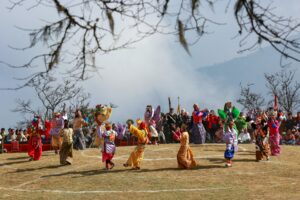
Tsechu, meaning “tenth day,” refers to a grand series of annual festivals celebrated throughout Bhutan. These festivals are vibrant displays of Bhutan’s rich mythological heritage, showcasing masked dances, colorful costumes, and religious rituals. Tsechus are dedicated to Guru Rinpoche, the patron saint of Bhutan, who is believed to have introduced Buddhism to the country. These festivals not only commemorate Guru Rinpoche’s life but also serve as a spiritual cleansing and bring blessings to the participants.
Paro Tshechu: Unveiling the sacred Thongdroel
Paro Tshechu, one of the most important religious festivals in Bhutan, is held annually in Paro valley. The highlight of this festival is the unveiling of the sacred Thongdroel, a large religious tapestry depicting Guru Rinpoche. The Thongdroel is believed to bless all who view it, purifying their sins and bestowing blessings. Paro Tshechu is a vibrant celebration that brings together locals and visitors, engrossing them in the beauty, spirituality, and mythology of Bhutan.
Jambay Lhakhang Drup: The mythical naked mask dance
Jambay Lhakhang Drup, held at the revered Jambay Lhakhang temple in Bumthang, is an extraordinary festival filled with mythological symbolism and sacred rituals. The highlight of this festival is the Tercham, or naked mask dance, where dancers, donned in intricately designed costumes, embody various deities and spirits. This powerful dance is believed to have the ability to cleanse sins and ward off evil spirits, playing a significant role in Bhutan’s mythological narrative.
Black-Necked Crane Festival: Reverence for spiritual beings
The Black-Necked Crane Festival, celebrated in the Phobjikha Valley, pays tribute to the endangered black-necked cranes that migrate to Bhutan during the winter months. This festival blends environmental conservation with mythological beliefs, as the cranes are considered sacred messengers of the gods. The festival showcases traditional songs, dances, and mask performances, emphasizing the importance of protecting these magnificent birds and the fragile ecosystems they inhabit.
Bhutan’s Mythology in Contemporary Society
Influence of mythology on Bhutanese culture
Mythology permeates every aspect of Bhutanese culture, shaping the way people perceive the world and interact with their surroundings. The belief in mythical beings and spiritual entities influences everyday life, guiding decisions, celebrations, and rituals. The moral lessons embedded in these myths serve as a moral compass, reinforcing virtues and fostering compassion, kindness, and respect.
Role of myths in daily life and rituals
Myths and legends play an integral role in daily life, guiding individuals’ behavior and providing narratives that imbue meaning and significance into mundane activities. From offerings to nature spirits before embarking on journeys to seeking blessings from deities for personal and collective well-being, mythology is intricately woven into the fabric of Bhutanese society.
Mythology as a tourist attraction
Bhutan’s vibrant mythology has also become a major tourist attraction, captivating visitors with its enchanting tales and mystical landscapes. Travelers from around the world are drawn to the allure of yetis, sacred sites, and festivals, eager to immerse themselves in Bhutan’s rich mythological heritage. The tourism industry has embraced the country’s mythology, offering experiences and itineraries that allow visitors to explore the mythical realms of Bhutan.
Preserving and promoting Bhutan’s mythological heritage
Recognizing the importance of preserving Bhutan’s mythological heritage, the government, along with monastic institutions and cultural organizations, actively promotes and preserves the country’s rich mythology. Efforts are made to document oral traditions, organize festivals and rituals, and educate both locals and visitors about Bhutan’s mythology. Through these initiatives, Bhutan is able to safeguard its cultural treasure and share its captivating myths and legends with the world.
Unveiling the Mysteries of Bhutan
Mythical Quests Travel: Experiencing Bhutan’s mythology firsthand
For those seeking an immersive journey into Bhutan’s mythology, Mythical Quests Travel offers one-of-a-kind experiences that allow you to explore the captivating stories and mysteries of the Himalayan kingdom. Embark on customized itineraries designed to delve deep into Bhutan’s mythological traditions, exploring sacred sites, witnessing vibrant festivals, and engaging with local communities to gain insights into their mythological beliefs and practices.
Exploration and research for uncovering hidden legends
Researchers and academics from around the world are drawn to Bhutan in their quest to uncover hidden legends and illuminate the lesser-known aspects of the country’s mythology. Collaborating with local scholars, these individuals undertake expeditions and conduct research to shed light on the depth and complexity of Bhutan’s mythological traditions. Their discoveries enrich our understanding of this mystical land and contribute to the preservation of its cultural heritage.
Engaging with locals and their mythological beliefs
To truly grasp the essence of Bhutan’s mythology, meaningful interactions with the local people are essential. Engage in conversations with Bhutanese individuals from various walks of life – monks, storytellers, artists, and everyday individuals – to gain a deeper understanding of their personal beliefs and experiences with mythology. These conversations provide unique insights into the living, breathing mythology of Bhutan and foster cultural exchange and appreciation.
As you explore the myths and legends of Bhutan, you will realize that they are more than just captivating stories. They serve as a spiritual compass, guiding the Bhutanese people in their daily lives and providing them with a deep connection to their natural environment. Bhutan’s mythology is a treasure trove waiting to be discovered, offering a glimpse into a world where the realms of the physical and the spiritual converge in a harmonious union. So, embark on a mythical journey to Bhutan, and allow yourself to be enthralled by the enchanting tales that have shaped this Himalayan kingdom.